
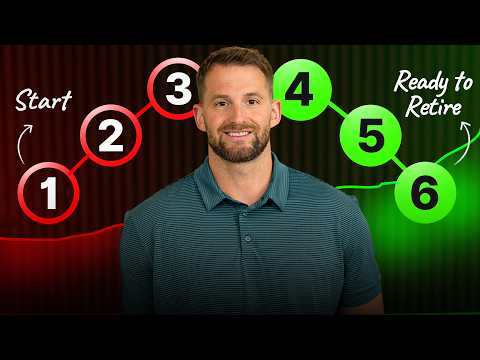
Retire at 50? How to Early WITHOUT Penalties or Tax Surprises
Key Takeaways
- Retiring before 59 and a half generally means finding a way around the 10% early withdrawal penalty on retirement accounts, not just accepting it.
- Rule 72(t) substantially equal periodic payments and Roth conversion ladders are two established ways to access retirement funds early without the penalty.
- Healthcare coverage before Medicare eligibility at 65 is one of the biggest costs to plan for, whether through the ACA marketplace or COBRA.
- A tax-diversified mix of taxable, tax-deferred, and Roth accounts gives you more flexibility to manage income and avoid tax surprises across a 10 to 15 year gap.
- Retiring at 50 requires funding a longer bridge to Social Security and Medicare than most retirement advice accounts for.
Retiring at 50 means funding your lifestyle for potentially 10 to 15 years before Social Security and Medicare are even an option. Most of your savings are likely sitting in accounts that were not designed to be touched this early. The 10% early withdrawal penalty on most retirement accounts before age 59 and a half is the first hurdle, but it is far from the only one.
Retiring this early is possible without penalties or unwelcome tax bills, but it requires more structure than a typical retirement plan built around a 65-year-old's timeline. The accounts you draw from, the order you draw from them, and how you handle healthcare all need to be mapped out in advance.
In this guide, you'll see:
- How to get to your money before 59 and a half without the 10% penalty
- How to bridge the healthcare gap before Medicare eligibility
- Why a tax-diversified portfolio matters more for a long retirement bridge
- Answers to the questions retirees ask most before retiring at 50
Let's get into it.
Table of Contents
Getting to Your Money Before 59 and a Half
Most 401(k) and IRA withdrawals taken before age 59 and a half trigger a 10% early withdrawal penalty on top of ordinary income tax. That makes an early retirement plan built around simply withdrawing from these accounts an expensive one.
Two structured approaches avoid that penalty. Rule 72(t) allows substantially equal periodic payments: a fixed schedule of withdrawals calculated using an IRS-approved method, taken consistently for five years or until you reach 59 and a half, whichever is longer. A Roth conversion ladder instead converts pretax savings to a Roth IRA in stages. After each conversion has been in the Roth account for five years, that converted amount can be withdrawn without the early withdrawal penalty.
Follow the schedule exactly. Deviating from a 72(t) schedule, or withdrawing converted funds before the five-year clock is up, can undo the tax advantage and trigger the very penalty you were trying to avoid.
| Approach | How It Works | Waiting Period | Best Fit |
|---|---|---|---|
| Rule 72(t) SEPP | Fixed, IRS-approved withdrawal schedule | 5 years, or until 59 and a half, whichever is longer | Households that need steady income right away |
| Roth conversion ladder | Convert pretax savings to Roth in stages | Each conversion available penalty-free 5 years after it's made | Households that can plan several years ahead |
Bridging the Healthcare Gap Before Medicare
Medicare does not begin until 65, which means retiring at 50 means covering health insurance for 15 years on your own. The two most common options are an ACA marketplace plan, where your premium and any subsidy are tied to your reported income, or COBRA continuation coverage from a former employer's plan, which is typically available for up to 18 months and generally costs more since you pay the full premium yourself.
Because ACA subsidies depend on your taxable income, the same withdrawal and conversion decisions that shape your tax bill also shape your health insurance costs. That is why these pieces need to be planned together rather than separately.
The accounts you draw from, the order you draw from them, and how you handle healthcare all need to be mapped out in advance.
For a fuller walk-through of ACA and COBRA options for this stretch, see covering health insurance from early retirement until Medicare.
Building a Tax-Diversified Portfolio for the Long Bridge
A retirement that starts at 50 needs income flexibility more than almost any other stage of life. That flexibility comes from having savings spread across taxable brokerage accounts, tax-deferred 401(k)s and IRAs, and Roth accounts, rather than concentrated in one type.
Taxable accounts can fund early spending without triggering penalties. Tax-deferred accounts become the source for your 72(t) payments or conversion ladder. Roth accounts provide a source of tax-free income you can draw on in a year when you want to keep your taxable income low, whether for ACA subsidy purposes or to stay in a lower bracket.
The right mix depends on how your current savings are already split and how many years you need the plan to bridge. Mapping this out as part of a full Retire Ready Roadmap™ before you give notice avoids discovering a gap in the plan after you have already left your income behind.
Building Your Bridge to Retirement at 50
Retiring at 50 is not a matter of saving enough and stopping. It is a matter of sequencing: which accounts you tap first, how you avoid the early withdrawal penalty, and how you cover healthcare for up to 15 years without a tax surprise along the way.
A Retire Ready Roadmap™ maps that sequence against your specific accounts and timeline before you give notice. If you'd like to see how it applies to your situation, schedule a Strategy Session to start the conversation.
Common Questions
Can I access my 401(k) or IRA before 59 and a half without a penalty?
Yes, through options like Rule 72(t) substantially equal periodic payments or a Roth conversion ladder, both of which allow structured access to retirement funds before 59 and a half without triggering the 10% early withdrawal penalty, as long as the rules are followed exactly.
What is a Roth conversion ladder?
It is a strategy of converting pretax retirement savings to a Roth IRA in stages over several years, so that each converted amount becomes available to withdraw penalty-free five years after that specific conversion.
How do I pay for health insurance if I retire before Medicare?
Most early retirees use either an ACA marketplace plan, where premiums and subsidies depend on reported income, or COBRA continuation coverage from a former employer, which is usually available for a limited time and costs more out of pocket.
Why does account type matter if I have enough saved overall?
Having savings spread across taxable, tax-deferred, and Roth accounts gives you more control over your taxable income each year, which affects your tax bracket, ACA subsidy eligibility, and how much of your retirement bridge you can fund without unwanted tax consequences.
This content is for educational purposes only and is not investment, tax, or legal advice.